
Saudi Arabia stands at the center of the global energy landscape. From upstream exploration to downstream distribution, fuel drives power plants, transportation fleets, manufacturing units, and heavy industrial operations across the Kingdom. In such a high-performance environment, fuel quality testing is not a routine task. It is a critical safeguard that protects equipment, optimizes operational output, and maintains product integrity.
Industries that rely on dependable petroleum product testing services in Saudi Arabia understand that even minor variations in fuel composition can lead to significant mechanical and financial consequences. Accurate laboratory evaluation ensures that fuels meet required specifications before they reach engines, turbines, and industrial systems. In Saudi Arabia’s demanding industrial climate, precision testing is not optional. It is essential for long-term reliability and performance.
The Strategic Importance of Fuel Quality in Saudi Arabia
Fuel plays a central role in several key sectors across the Kingdom:
- Oil and gas production
- Power generation facilities
- Marine transport operations
- Aviation services
- Heavy construction and logistics
Each of these industries depends on consistent fuel characteristics such as viscosity, sulfur content, flash point, and calorific value. Variations in these parameters can affect combustion efficiency, emissions, and equipment longevity.
Fuel quality testing provides verified data on these characteristics, allowing companies to confirm that the product delivered matches required standards. In a market as large and dynamic as Saudi Arabia’s, this verification protects both operational continuity and brand reputation.
Preventing Equipment Damage and Operational Downtime
Industrial engines and turbines operate under extreme conditions. Poor quality fuel can introduce contaminants, excessive sulfur, water content, or particulate matter that compromises performance.
Common risks of untested fuel include:
- Corrosion of engine components
- Injector fouling and clogging
- Reduced combustion efficiency
- Increased maintenance costs
- Unexpected operational shutdowns
Through structured fuel quality testing, laboratories detect impurities before they cause damage. Early identification allows corrective action at the supply stage rather than after mechanical failure. For industries managing large-scale assets, this proactive approach translates into substantial cost savings.
Ensuring Compliance with Industry Standards
Saudi Arabia maintains strict fuel specifications aligned with international benchmarks. Refineries, distributors, and industrial consumers must ensure their fuel meets defined chemical and physical parameters.
Laboratory testing confirms compliance by evaluating:
- Sulfur concentration levels
- Density and viscosity
- Water and sediment content
- Flashpoint
- Ash and metal traces
Accurate reporting from qualified laboratories supports documentation requirements and quality control processes. Reliable Fuel and oil laboratory analysis in KSA ensures that fuel supplied within the Kingdom aligns with performance expectations and industry norms.
Supporting Environmental Responsibility
Environmental considerations are increasingly significant across Saudi Arabia’s industrial landscape. Fuel composition directly impacts emissions, air quality, and environmental footprint.
High sulfur content, unstable fuel blends, and contamination can increase emissions and affect surrounding ecosystems. Fuel quality testing plays a role in environmental monitoring by verifying that products comply with established emission-related parameters.
Industries that invest in proper fuel analysis demonstrate accountability and responsible resource management. This aligns with national sustainability objectives and global environmental commitments.
Fuel Quality Testing for Different Fuel Types
Saudi Arabia’s industrial ecosystem utilizes multiple fuel categories. Each requires specific analytical approaches.
Diesel Testing
- Cetane number evaluation
- Sulfur content measurement
- Cold flow property analysis
- Water and sediment determination
Gasoline Testing
- Octane rating assessment
- Vapor pressure testing
- Distillation characteristics
- Additive concentration analysis
Marine and Heavy Fuel Oil Testing
- Viscosity testing
- Flash point determination
- Total sediment measurement
- Contaminant profiling
Each fuel type presents unique risks and performance expectations. Comprehensive fuel quality testing ensures suitability for its intended application.
The Role of Advanced Laboratory Infrastructure
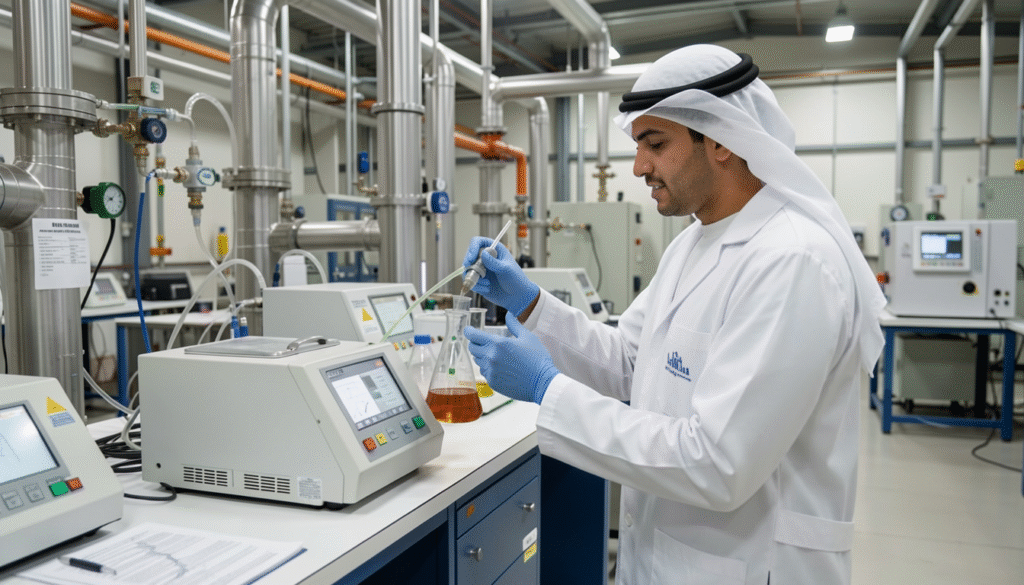
Reliable results depend on sophisticated laboratory capabilities. Modern fuel analysis requires advanced instrumentation and trained specialists who understand both chemistry and industrial applications.
Key laboratory techniques include:
- Gas chromatography for hydrocarbon profiling
- Spectrometric analysis for trace metals
- Distillation apparatus for volatility testing
- Titration methods for sulfur and acidity determination
GEOChem integrates modern analytical technologies with experienced chemists who understand Saudi Arabia’s industrial requirements. By combining technical expertise with regional insight, GEOChem delivers dependable fuel quality testing solutions tailored to the Kingdom’s energy-driven economy.
Why Industries Trust Professional Testing Partners
Selecting a professional laboratory partner ensures:
- Accurate and repeatable test results
- Fast turnaround times
- Detailed technical reports
- Industry-specific expertise
- Secure sample handling protocols
In Saudi Arabia’s competitive industrial environment, data accuracy influences operational decisions, procurement strategies, and maintenance planning. Trusted laboratories serve as critical partners rather than simple service providers.
Fuel quality testing also plays a role in dispute resolution, shipment verification, and contractual quality assurance. Independent laboratory validation builds confidence between suppliers and buyers.
Integrating Fuel Testing into a Broader Quality Framework
While fuel analysis is essential, many organizations benefit from integrated testing and inspection solutions. A comprehensive quality approach strengthens risk management and operational oversight.
Companies seeking broader assurance frameworks can explore integrated TIC services that combine testing, inspection, and certification under one coordinated structure. This unified approach supports quality control across supply chains and industrial processes.
Conclusion
Fuel powers Saudi Arabia’s industrial engine. From refinery operations to power generation and transport logistics, performance depends on consistent fuel quality. Fuel quality testing provides the scientific verification that safeguards machinery, reduces downtime, and supports compliance with established standards.
In a region where energy infrastructure plays a defining economic role, laboratory precision is a strategic asset. GEOChem delivers reliable fuel quality testing solutions supported by advanced analytical capabilities and deep regional expertise. Industries seeking dependable laboratory validation and comprehensive quality support can strengthen their operational confidence by partnering with GEOChem and exploring its integrated TIC services for a complete approach to testing and assurance.